Welcome to the 1,011 S. cerevisiae multicellularity database! We utilized the 1,011 S. cerevisiae genome panel collected from diverse environments across the globe (Peter et al. 2018). In total, 998 strains were obtained from Paul Rowley at the University of Idaho. The clades, number of SNPs, zygosity, ecological origins, isolation, geographical origins, etc. associated with each strain were obtained from the original study (Peter et al. 2018).
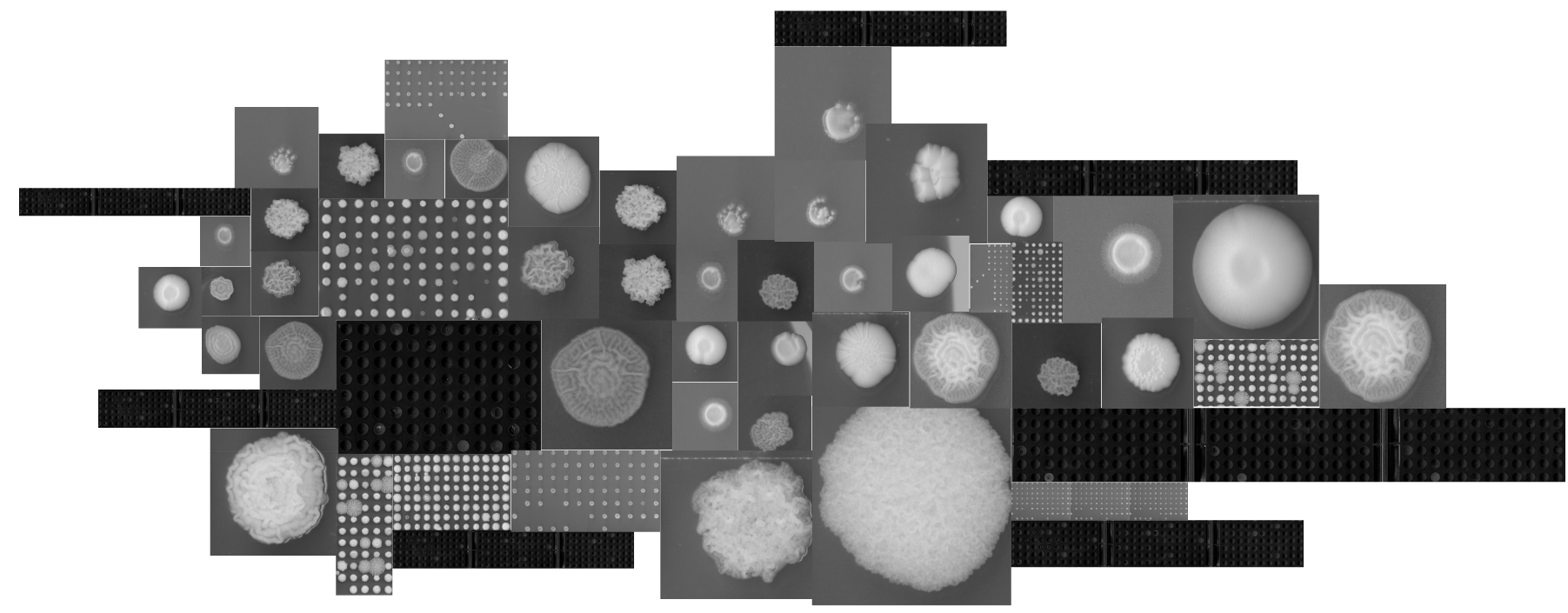
Five multicellular traits were phenotyped: (1) complex colony morphology (CCM), (2) pseudohyphal growth (PSH), (3) plastic adherence (PA), (4) invasive growth (IG), and (5) floating mats (Flor). Phenotyping was commenced by culturing yeast plates from the freezer at 30 °C in liquid yeast-peptone-dextrose (YPD) medium (1% yeast extract, 2% peptone, 2% agar, 2% dextrose) for 48 hours. Yeast cultures were then transferred using a 96-pin multi-blot replicator (V&P Scientific no. VP408FP6) to different media (see each trait’s tab for the specific medium used) to induce five different multicellular traits. 997 strains were phenotyped and recorded in this project. Quantification methods and scales for each phenotype are described on their respective pages, accessible through the top navigation bar. For the full pipelines used to computationally quantify the multicellular traits, please visit our github.
We thank our phenotyping team: Armaan Salchak, Atari Abundo, and Grace Bellamy. We also thank our co-authors: Luke Ekdahl and Mariana Vanpelt. This project is supported by NIH, grant number: R15-GM152938
This website is created by Guodan (Debby) Zhong, a former student in the Murphy Lab at William & Mary.